

How to Avoid Tourist Scams in India: The Ultimate 2026 Guide
Introduction
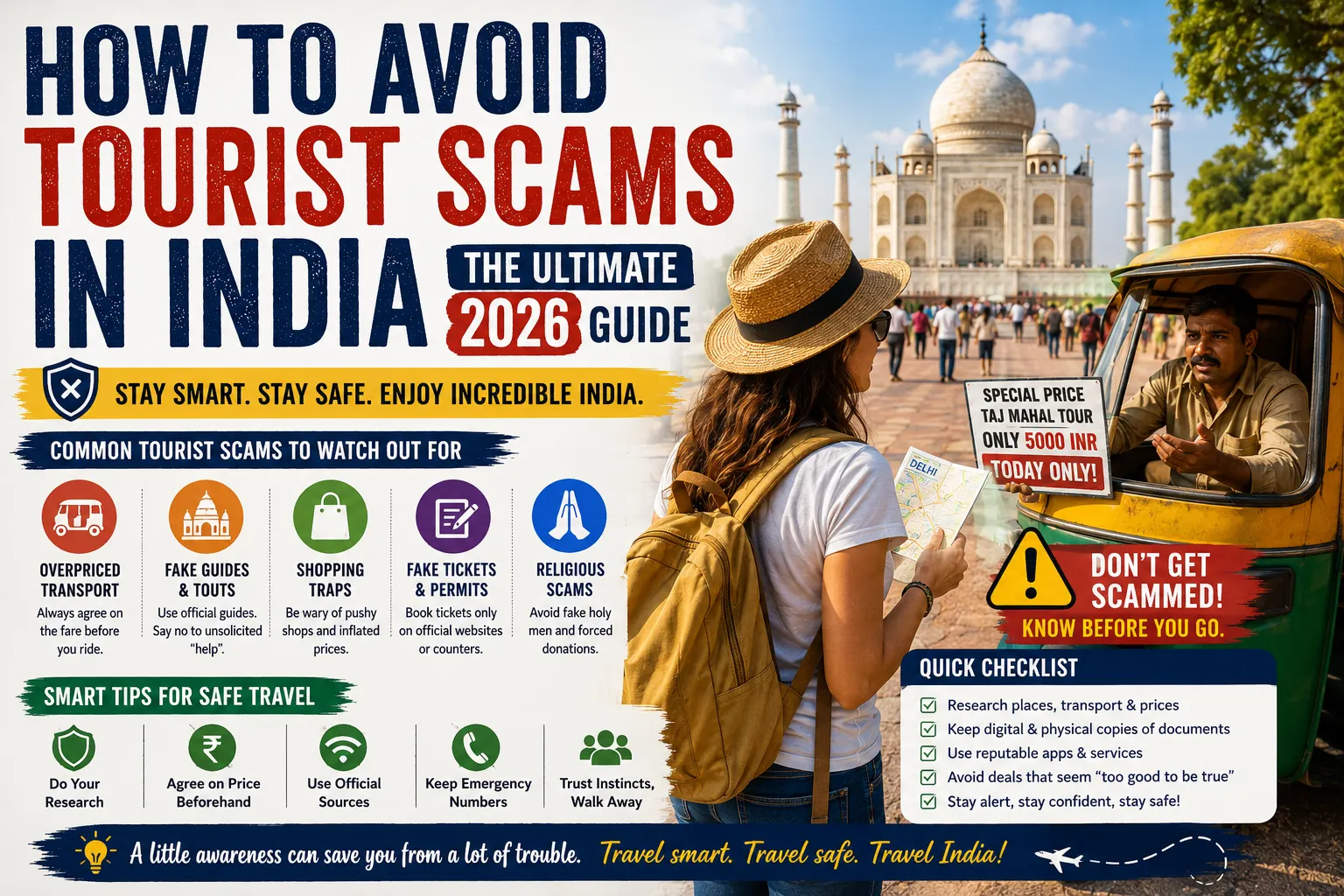
India is a land of breathtaking contrasts, unparalleled history, and incredible hospitality. For most travelers, a journey to the subcontinent is a life-changing experience filled with warm encounters and majestic sights. However, like any major tourist destination around the globe, it has its share of opportunists. If you are wondering how to avoid tourist scams in India, you are already taking the most important first step: preparation.
In the first 100 words of planning your trip, you must accept that while violent crime against tourists is incredibly rare, petty fraud and aggressive touting are realities of the Indian travel landscape. The good news? In 2026, with the rapid digitization of the country—from app-based taxis to universal digital payments—it is easier than ever to bypass these traps. This comprehensive guide will walk you through the most notorious hustles, from fake ticketing agencies to rigged taxi meters, equipping you with the street-smart knowledge you need. By learning the signs of these common ploys, you can travel confidently, protect your wallet, and focus on the incredible beauty that India has to offer.
Overview: Navigating India Safely and Smartly
To understand how to avoid tourist scams in India, it helps to understand the context of the travel industry here. India is vast, densely populated, and heavily reliant on tourism in states like Rajasthan, Kerala, and Delhi. For many locals working in the informal economy, a foreign tourist represents a significant payday. This economic disparity is the root cause of most scams, which are usually designed to separate you from your money through deception rather than force.
Over the past few years, the Indian government has cracked down significantly on touts, deploying dedicated tourist police in major hubs and heavily promoting digital infrastructure. The introduction of unified booking portals and ride-sharing apps has naturally filtered out many middle-man scams. However, human ingenuity persists. Scammers have simply evolved, moving from aggressive street tactics to more sophisticated psychological tricks. The golden rule for traveling in India is simple: trust your instincts, never let anyone rush your decisions, and always verify information independently.
The Most Common Scams in India and How to Spot Them
Awareness is your best defense. Scammers in India are often incredibly charismatic, polite, and well-spoken. They use hospitality as a weapon to disarm you. Here are the classic setups you need to be aware of.
The “Hotel is Closed” or “Burned Down” Scam
This is perhaps the oldest trick in the book, yet it still catches tired travelers off guard, particularly late at night. You hop into a taxi at the airport, give the driver your hotel name, and halfway there, the driver looks concerned. They will claim that your hotel has “burned down,” “closed due to a tax dispute,” or is situated in a zone blocked by religious riots. They will then helpfully offer to take you to a “safe” alternative hotel—where they receive a massive commission, and you are charged triple the standard rate for a subpar room.
How to beat it: Insist the driver takes you exactly to the address you provided. Tell them you have friends waiting for you there, or simply use a GPS-tracked ride-sharing app like Uber, Ola, or BluSmart where drivers cannot deviate from the route.
Fake Tourist Offices (Particularly in New Delhi)
If you are wandering near Connaught Place or the New Delhi Railway Station, a well-dressed, friendly local might strike up a conversation. Upon hearing you need train tickets or a tour, they will direct you to the “Official Government Tourist Office.” These offices often feature fake government seals and professional-looking staff. Once inside, they will tell you that all trains are fully booked due to a “sudden national holiday” and pressure you into buying wildly overpriced private car tours.
How to beat it: The only official government tourism office in Delhi is the “Incredible India” office located at 88 Janpath. Ignore all other storefronts claiming to be official. For train tickets, book online directly via the IRCTC website or authorized international booking apps like 12Go Asia.
The Train Station Ticket Fraud
Similar to the fake office scam, this happens directly at the train station. A person wearing a uniform or a fake badge will stop you before you reach the platform, claiming your e-ticket is invalid, needs a special stamp, or that your train has been canceled. They will try to physically take your bags or escort you to a “ticketing agent” outside the station.
How to beat it: Ignore anyone who approaches you outside the train station or on the stairs. True railway officials (TTEs) wear specific uniforms, carry digital tablets or charts, and will only check your ticket after you have boarded the train or right at your designated carriage door.
Transportation Traps: India Taxi and Rickshaw Scams
Getting around Indian cities is an adventure, but it is also the most common arena for small-scale friction between tourists and locals.
Rigged Meters and “Broken” GPS
When hailing a traditional auto-rickshaw or street taxi, the driver may refuse to use the meter, claiming it is “broken.” If they do use it, it might be rigged to tick up incredibly fast. Alternatively, they may pretend they don’t know the way to your destination and take a massive detour to drive up the fare.
How to beat it: Always agree on a flat fare before you get inside a rickshaw if they refuse the meter. Better yet, bypass this entirely by using ride-hailing apps. Even if you want to take a street rickshaw for the experience, check the price on an app first so you know the fair market rate to negotiate.
The Unsolicited Tour Guide or “Friendly Local”
While walking toward a monument like the Taj Mahal or Amber Fort, a friendly local will match your pace, offering historical tidbits and pointing out good photo spots. They will insist they are “not a guide” and just want to practice their English. At the end of the tour, their demeanor will change, and they will aggressively demand a hefty tip or steer you into their cousin’s high-priced souvenir shop.
How to beat it: A firm, polite “No, thank you” and breaking eye contact usually works. If they persist, firmly state “I do not want a guide.” Hire official, licensed guides provided by the monument’s official ticket counter if you want a historical tour.
Shopping and Currency Scams to Watch Out For
India is a shopper’s paradise, famous for its textiles, gems, and spices. Unfortunately, where there is commerce, there is deception.
The Gemstone and Jewelry Export Scam
This is a high-stakes scam mostly found in Rajasthan (Jaipur) and Goa. A friendly shop owner will offer you a “lucrative business deal.” They will ask you to use your duty-free tourist allowance to export some precious gems to your home country, promising you a large commission once a “buyer” contact you there. They will ask you to leave your credit card details or a cash deposit as “security.” Unsurprisingly, the gems are worthless colored glass, the buyer never calls, and your deposit is gone.
How to beat it: Never engage in export business deals with strangers. If an offer sounds too good to be true, it absolutely is.
Fake Pashmina and Silk Fraud
When shopping for luxurious textiles, many vendors will claim their acrylic or polyester blends are 100% pure Kashmiri Pashmina or pure silk. They may even perform the “ring test” (pulling the shawl through a wedding ring) or the “burn test” to prove its authenticity, using slight-of-hand tricks.
How to beat it: Pure Pashmina is incredibly expensive and rare. Buy high-value textiles only from government-emporiums (like the state-run cottage industry shops) or well-reviewed, reputable boutiques, rather than street markets.
Overpriced Sim Cards and Data Plans
Upon arrival, you may find small vendors offering SIM cards at inflated prices, claiming activation fees and tourist taxes. Sometimes, they activate the SIM under their own ID, and the network drops a few days later, leaving you disconnected.
How to beat it: Purchase an e-SIM before you travel to India (using apps like Airalo or Holafly). If you need a physical SIM, only buy it from an official provider kiosk (like Airtel or Jio) directly inside the international airport terminal.
Practical Tips: How to Avoid Tourist Scams in India Effectively
Beyond spotting the specific scams, adopting a few general travel habits will drastically reduce your chances of being targeted.
Rely on Digital Payments (UPI)
One of the best safe travel tips for India in 2026 is to go cashless. The Unified Payments Interface (UPI) is used everywhere, from luxury hotels to roadside coconut vendors. By setting up a tourist-friendly UPI wallet (like Cheq or specialized tourist accounts), you eliminate the risk of short-changing, receiving counterfeit notes, or dealing with vendors who claim to have “no change” for a 500-Rupee bill.
Utilize the Tourist Police in India
Most heavily visited states—such as Rajasthan, Kerala, and Uttar Pradesh—have dedicated Tourist Police forces. They are identifiable by specific badges or kiosks near major monuments. These officers are trained to deal with foreign visitors, speak English, and hold significant authority over touts. If a scammer or aggressive vendor will not leave you alone, simply walking toward a police officer, or threatening to call them, will usually make the scammer disappear instantly.
Do Your Research on Pricing?
Information is power. Ask your hotel receptionist or a trusted local host what a standard rickshaw ride to the market should cost. Look up monument entrance fees online before you arrive. When you know the correct price of goods and services, you project confidence, which naturally deters scammers from targeting you.
Conclusion: Master How to Avoid Tourist Scams in India
India is a destination that will reward you a hundredfold for the effort you put into understanding its rhythms. Learning how to avoid tourist scams in India is not about fostering a sense of paranoia; it is about cultivating confidence. When you know the classic tricks—like the “closed hotel” routine or the fake ticket inspectors—you can brush them off with a smile and a firm “no.”
By relying on modern conveniences like digital UPI payments, booking your transit through verified apps, and standing your ground with overly persistent touts, you take control of your travel narrative. Do not let the fear of being scammed deter you from experiencing the warmth of a roadside chai stall, the majesty of the Mughal architecture, or the serenity of the Kerala backwaters.
Ready to explore the subcontinent with confidence? Arm yourself with our guide on A Beginner’s Guide to Using Digital UPI Payments in India, and subscribe to our newsletter for more expert tips to make your next adventure safe, seamless, and unforgettable!
Frequently Asked Questions (FAQs)
Q.1 Are tourist scams in India dangerous?
No, the vast majority of tourist scams in India are non-violent and rely entirely on deception, confusion, or pressure. Scammers are after your money, not your physical safety. Staying calm and firmly saying “no” is usually enough to defuse the situation.
Q.2 How do I politely say no to aggressive street vendors?
In India, a soft “maybe later” is often interpreted as a “yes.” You must be firm. A strong “No, thank you” accompanied by a hand gesture (palm out, facing them) and walking away without breaking stride is the most effective and polite way to handle touts.
Q.3 Is it safe to use ride-sharing apps like Uber in India?
Yes, utilizing Uber, Ola, or BluSmart is one of the best ways to avoid transportation scams. The fare is locked in, the route is GPS-tracked, and the driver’s identity is verified, making it immensely safer and more transparent than hailing street cabs.
Q.4 What should I do if I realize I have been scammed?
If you have lost money to a scam, report it to the local Tourist Police immediately. Keep all receipts, business cards, or text messages. While getting your money back is not guaranteed, the police can shut down fraudulent operations and prevent future tourists from falling victim.
Q.5 How can I ensure the tour agency I am using is legitimate?
Only book tours through highly rated providers on trusted international platforms (like Viator or GetYourGuide), or consult the official Ministry of Tourism website. Never book a multi-day tour through an unsolicited agent who approaches you on the street.