

Travel Insurance for India: What US Travelers Should Know
Introduction
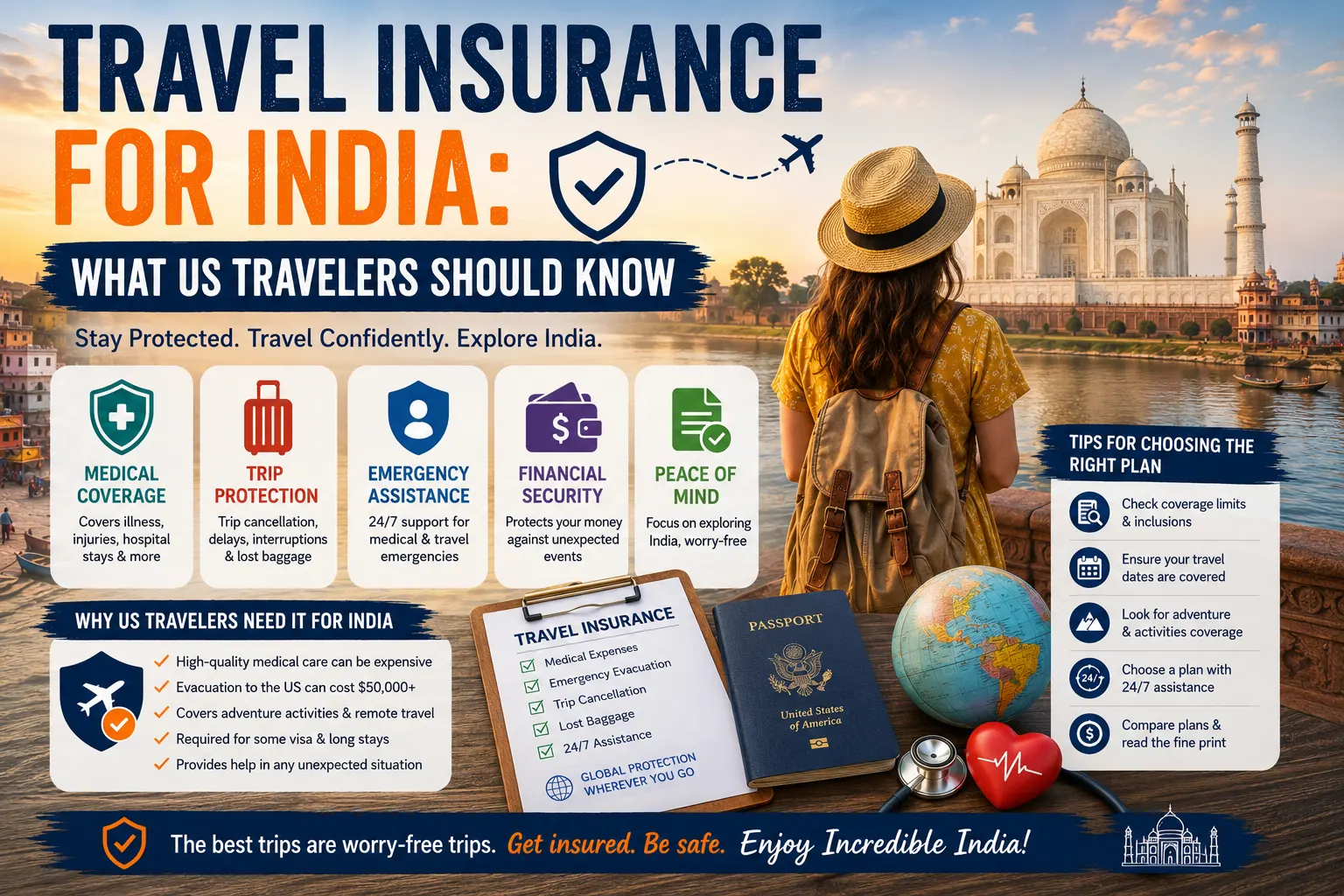
Preparing for a journey to the Indian subcontinent is an incredibly exciting endeavor. From the snow-capped peaks of the Himalayas to the sun-drenched beaches of Goa, the country offers unparalleled cultural and geographical diversity. However, amidst the excitement of booking flights and securing your visa, there is one crucial step you cannot afford to skip: securing comprehensive travel insurance for India.
In the first 100 words of planning your trip, you might wonder if this extra expense is truly necessary. The reality is that US domestic health plans—including Medicare—rarely provide adequate coverage overseas. Furthermore, the unpredictable nature of international travel, from sudden monsoon flight cancellations to unexpected gastrointestinal illnesses, makes traveling unprotected a massive financial risk. Whether you are a solo backpacker, a professional attending a conference in Bangalore, or a family exploring the Golden Triangle, understanding the nuances of your policy is paramount. This guide breaks down exactly what US citizens need to look for, avoid, and prioritize when selecting the perfect policy for their Indian adventure.
Why You Need Travel Insurance for India
India is a vibrant, bustling, and sometimes chaotic destination. While it is generally safe for tourists, the logistical and environmental realities of the country present unique challenges. Here is why investing in reliable India trip insurance is an absolute necessity.
The Reality of Healthcare in India for US Citizens
India boasts some of the finest private healthcare facilities in the world. Hospitals in major metropolitan areas like New Delhi, Mumbai, and Chennai are equipped with state-of-the-art technology and staffed by highly trained, English-speaking physicians. However, these top-tier private facilities operate strictly on a fee-for-service basis. Without proper medical coverage in India for US citizens, you will be required to pay out-of-pocket before receiving treatment. Public hospitals, while highly affordable, are often severely overcrowded and lack the amenities and hygiene standards that Western travelers are accustomed to. A robust insurance policy guarantees you access to premium private care without draining your savings.
Trip Cancellations and Flight Delays
Traveling from the United States to India usually involves a journey of 15 to 24 hours, often with layovers in Europe or the Middle East. With such complex itineraries, the risk of missed connections or flight delays increases exponentially. Furthermore, India experiences intense weather patterns, such as the summer monsoon season (June to September) and heavy winter fog in the north (December to January), which frequently cause widespread domestic and international flight cancellations. Trip cancellation insurance for India reimburses your non-refundable expenses if your trip is derailed by covered reasons, saving you thousands of dollars in lost hotel bookings and transit fees.
Lost Luggage and Travel Interruptions
Imagine arriving in New Delhi only to find your luggage is stranded in Frankfurt. Replacing essentials in a foreign country can be stressful and expensive. Most comprehensive travel insurance plans include allowances for baggage delay, providing you with a daily stipend to purchase necessary clothing and toiletries until your bags are recovered. Additionally, if an emergency forces you to cut your trip short and return to the US, trip interruption coverage helps cover the costly, last-minute flights home.
Key Coverage Areas to Look For
Not all policies are created equal. When browsing for the best travel insurance for India, you must look beyond the price tag and scrutinize the actual coverage limits. Here are the core areas your policy must cover.
Comprehensive Medical Emergency Coverage
This is the single most important aspect of your policy. Travelers to India are susceptible to specific regional ailments, ranging from foodborne illnesses (famously known as “Delhi Belly”) to mosquito-borne diseases like Dengue fever or Malaria in certain seasons. Altitude sickness is also a major risk for those trekking in the northern states of Himachal Pradesh or Ladakh. Ensure your policy has a minimum of $100,000 in emergency medical coverage to handle hospital stays, diagnostics, and prescription medications.
Medical Evacuation and Repatriation
India is vast, and many of its most beautiful destinations are highly remote. If you suffer a severe injury or illness in a remote Himalayan village or a secluded tiger reserve in Madhya Pradesh, you may need an emergency medical airlift to a major city like Delhi or Mumbai for adequate care. Medical evacuations can cost upwards of $50,000 to $100,000. Your policy must include a high limit for emergency medical evacuation. Furthermore, it should include repatriation of remains, which covers the logistical costs of returning a traveler to the US in the tragic event of death.
Coverage for Pre-Existing Conditions
Most standard travel insurance plans explicitly exclude coverage for pre-existing medical conditions. If you take medication for a heart condition, asthma, or diabetes, a flare-up in India might not be covered. Fortunately, many providers offer a “Pre-Existing Condition Waiver” if you purchase your policy within a specific window (usually 14 to 21 days) after making your initial trip deposit. Always read the fine print to ensure your specific health profile is protected.
Understanding Policy Exclusions for India
Just as important as knowing what is covered is knowing what is not covered. Insurance companies are strict about their exclusions, and engaging in certain activities in India can void your policy instantly.
Adventure Sports and Activities (Trekking, Motorcycles)
India is a playground for adventure enthusiasts. However, standard travel insurance rarely covers “high-risk” activities. If your itinerary involves trekking above certain altitudes (often capped at 3,000 or 4,000 meters by basic policies), white-water rafting in Rishikesh, or riding the famous Royal Enfield motorcycles through the Spiti Valley, you will likely need to purchase an “Adventure Sports Add-On.” Always check the altitude limits of your policy if you plan to visit the mountains.
Unlicensed Driving (Scooters in Goa)
Renting a scooter is incredibly popular in beach destinations like Goa and Kerala. However, if you are injured while driving a scooter without a valid motorcycle license from your home country and an International Driving Permit (IDP), your insurance claim will almost certainly be denied. Furthermore, driving under the influence of alcohol, or failing to wear a helmet—even if local laws are lax—will void your medical coverage immediately.
Choosing the Best Travel Insurance for India
With countless providers on the market, selecting the right plan can feel overwhelming. Here is how to narrow down your options based on your specific travel style.
Single-Trip vs. Annual Multi-Trip Policies
- Single-Trip Policy: This is ideal for vacationers planning a one-off trip to India. The premium is calculated based on the length of your stay, your age, and the total non-refundable cost of the trip.
- Annual Multi-Trip Policy: If you are a professional traveling to India multiple times a year for business, or a digital nomad exploring Asia, an annual policy is highly cost-effective. It covers all trips taken within a 365-day period (usually capped at 30 to 45 days per individual trip).
Comparing Deductibles and Premium Costs
When evaluating travel insurance plans, look at the deductible—the amount you must pay out-of-pocket before the insurance kicks in. A policy with a $0 deductible will have a higher upfront premium, while a policy with a $250 deductible will be cheaper to purchase. Families might opt for a higher deductible to lower the overall premium, whereas travelers with known health sensitivities might prefer the peace of mind of a zero-dollar deductible. Compare quotes from reputable providers like Allianz, World Nomads, Seven Corners, or Travel Guard to find the balance that suits your budget.
Practical Tips: Buying and Using Travel Insurance in India
Having a policy is great, but knowing how to utilize it during a crisis in a foreign country is what truly matters.
When to Purchase Your Policy
Do not wait until the week of your flight to buy insurance. The best time to purchase your policy is immediately after booking your flights and making your first non-refundable hotel deposits. Buying early allows you to qualify for the aforementioned Pre-Existing Condition Waivers and gives you immediate protection under trip cancellation clauses in case a personal emergency forces you to scrap the trip months in advance.
How to File a Claim While Abroad
If you experience an emergency in India, follow these steps to ensure your claim is processed smoothly:
- Call the Emergency Assistance Hotline: Before admitting yourself to a hospital (unless it is a life-or-death emergency), call your insurance provider’s 24/7 global assistance number. They can direct you to an approved, in-network hospital in your Indian city, which can sometimes allow for direct billing rather than you paying out of pocket.
- Keep Every Receipt: Indian pharmacies and clinics will provide paper receipts. Keep every single bill, prescription slip, and doctor’s note.
- Get Police Reports: If you are a victim of theft or an accident, you must obtain a First Information Report (FIR) from the local Indian police. Insurance companies will not process a theft or accident claim without this official documentation.
- Document Flight Delays: Request official written confirmation from the airline detailing the exact reason and duration of any flight delay or cancellation.
Conclusion: Travel with Peace of Mind
Navigating the vibrant, sensory-rich landscapes of India is a life-changing experience that requires flexibility, an open mind, and a solid safety net. Finding the right travel insurance for India is not just about fulfilling a checklist item; it is about guaranteeing that your investment, your health, and your peace of mind are protected against the unpredictable.
By understanding your specific medical needs, thoroughly reviewing policy exclusions regarding adventure activities, and preparing your documentation in advance, you can focus on what truly matters: soaking in the majestic history, incredible cuisine, and unparalleled warmth of the Indian people.
Ready to ensure your trip is fully protected? Start comparing quotes from top-rated providers today, and don’t forget to review our guide on The Ultimate Medical Kit Packing List for India so you are prepared for minor bumps along the road!
Frequently Asked Questions (FAQs) About Indian Travel Insurance
Q.1 Is travel insurance mandatory for US citizens visiting India?
No, the Indian government does not legally require US citizens to hold travel insurance to obtain an e-Visa or enter the country. However, the US State Department strongly advises all travelers to secure comprehensive medical and evacuation insurance before visiting.
Q.2 Will my US health insurance or Medicare cover me in India?
Generally, no. Medicare provides zero coverage outside the United States. While some private US health insurance plans may offer limited out-of-network emergency coverage abroad, they rarely cover medical evacuation, and you will be required to pay upfront in India and seek reimbursement later.
Q.3 Does travel insurance cover “Delhi Belly” or food poisoning?
Yes. Severe foodborne illnesses that require a doctor’s visit, prescription medication, or hospitalization are covered under the emergency medical portion of standard travel insurance policies.
Q.4 Can I buy travel insurance after I have already arrived in India?
It is highly difficult, and often impossible, to buy standard travel insurance once your trip has begun. Most providers require you to purchase the policy while you are still physically in your home country. A few specialized providers (like World Nomads) allow post-departure purchases, but they often come with waiting periods before coverage activates.
Q.5 How much does travel insurance for India typically cost?
As a general rule of thumb, a comprehensive travel insurance policy should cost between 4% and 10% of your total non-refundable trip cost. Variables like your age, the length of your stay in India, and any added hazardous activity coverage will impact the final price.