
The Ultimate India Travel Guide for First-Time Visitors (2026)
Introduction
Welcome to the start of an incredible journey. If you are preparing for your inaugural trip to the subcontinent, you need a reliable, up-to-date India travel guide for first-time visitors. India is not just a country; it is a vibrant, sensory-rich continent within a country, boasting 28 states, thousands of spoken dialects, and an unparalleled historical legacy. In 2026, India is more accessible and tourist-friendly than ever, seamlessly blending ancient spiritual traditions with cutting-edge digital infrastructure and high-speed transit.
However, its sheer scale and bustling energy can be daunting for beginners. Where do you start? How do you travel safely? What should you pack? Whether you are a professional seeking a cultural retreat, a family planning a memorable holiday, or an adventurer eager to explore the Himalayas, this comprehensive guide will equip you with the knowledge you need. We will break down the ideal beginner-friendly North India travel circuits, explain the modern digital conveniences available, and provide actionable tips to ensure your first Indian adventure is absolutely flawless.
Designing Your Itinerary: The Best Routes for Beginners
The most common mistake first-timers make is trying to see the entire country in two weeks. India is vast. To avoid travel fatigue, it is highly recommended to pick a specific region and explore it deeply. Here are the most rewarding and accessible routes for your first visit.
The Golden Triangle with a Spiritual Twist
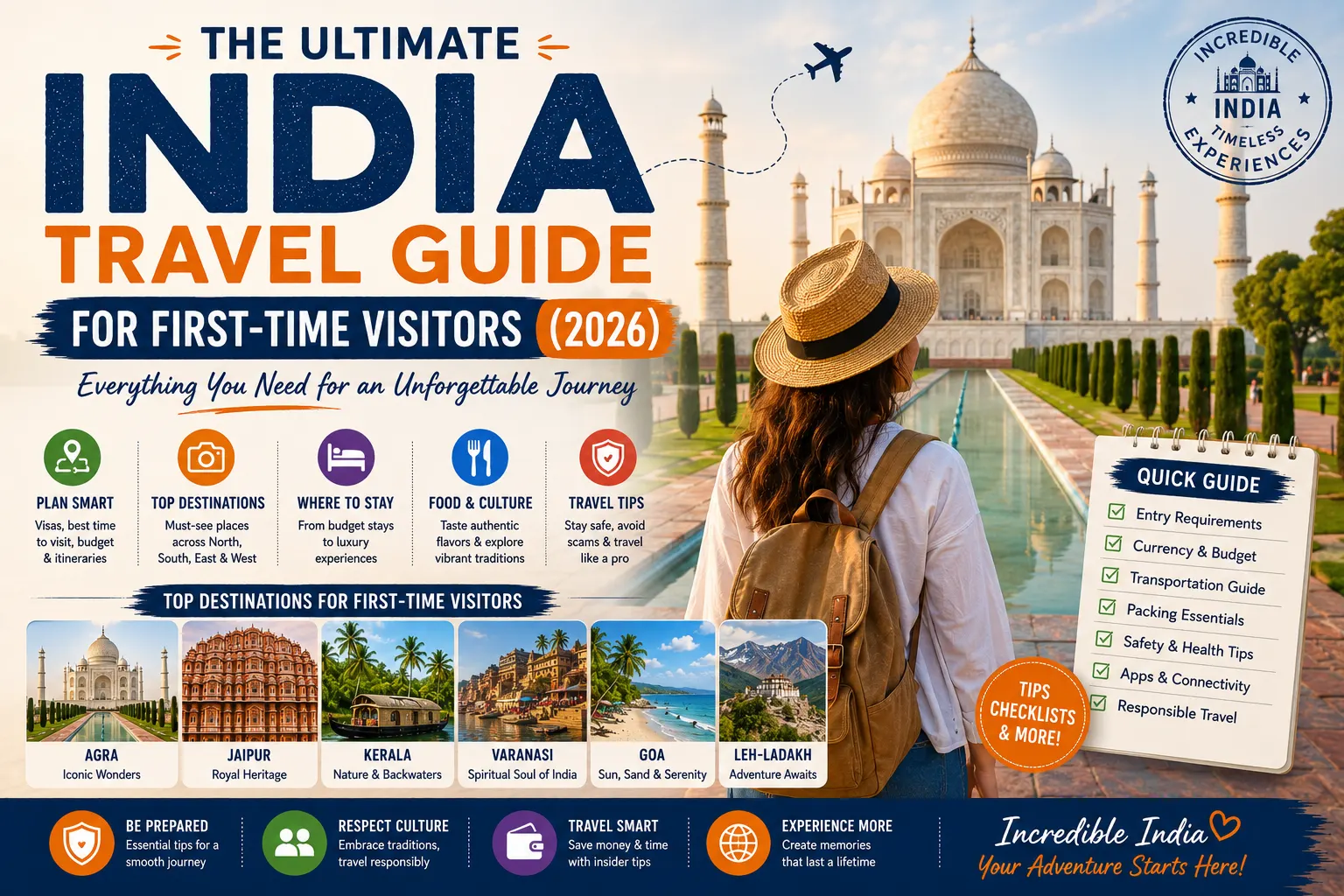
The Golden Triangle—Delhi, Agra, and Jaipur—is the quintessential introduction to India. It is logistically seamless, deeply historical, and heavily supported by world-class tourism infrastructure.
- Delhi: Start your journey in the capital. Spend your days exploring the Mughal grandeur of Humayun’s Tomb and the bustling alleys of Chandni Chowk.
- Agra: Home to the iconic Taj Mahal. To avoid the crowds and the midday heat, booking a sunrise Taj Mahal tour is an absolute must for your itinerary. The lighting is spectacular for photography, and the atmosphere is deeply serene.
- Jaipur: The “Pink City” offers majestic forts like Amber Fort and opulent royal palaces.
- Mathura and Vrindavan: For a deeper cultural dive, many travelers now expand the triangle to include these twin holy cities, located just a short drive from Agra. As the birthplace of Lord Krishna, they offer an incredible, vibrant window into Hindu spirituality and are a deeply rewarding detour.
The Royal Rajasthan Circuit
If you want to extend your time beyond Jaipur, Rajasthan offers an unforgettable journey through the land of kings.
- Udaipur & Jodhpur: Continue to the romantic, lake-filled city of Udaipur, followed by the towering Mehrangarh Fort in the “Blue City” of Jodhpur.
- Ranthambore National Park: For wildlife enthusiasts and families, adding a safari in Ranthambore is highly recommended. It is one of the best places in the world to spot wild Bengal tigers in their natural habitat, guided by expert forest rangers.
The Majestic Northern Mountains
If the heat of the plains isn’t your preference, the Indian Himalayas offer a completely different, incredibly peaceful aesthetic. These mountain destinations are famous for their safety and hospitality.
- Shimla and Manali: These classic hill stations in Himachal Pradesh offer cool air, pine forests, and colonial-era architecture. They are incredibly family-friendly and provide a soft landing for tourists wanting to experience the Himalayas in comfort.
- Leh Ladakh: For the truly adventurous, Leh Ladakh is a high-altitude desert featuring Tibetan Buddhist monasteries and crystal-clear lakes. Because of its remote nature and border proximity, it is one of the safest regions in India, though you must factor in a day or two for altitude acclimatization.
Navigating India: The 2026 Travel Landscape
Traveling to India for beginners has changed dramatically over the last few years. The country has modernized its infrastructure, making logistics significantly smoother.
The Digital Payment Revolution (UPI)
You no longer need to carry large wads of Rupees. India runs on the Unified Payments Interface (UPI). From luxury hotels to roadside coconut vendors, everyone accepts QR code payments. As a tourist, you can now download specific apps (like Cheq) designed for international phone numbers, link your home credit card, and scan-to-pay everywhere. This eliminates haggling over change and keeps your money secure.
Modernizing the Indian Railways
The romance of train travel in India remains, but the comfort level has skyrocketed. The introduction of the Vande Bharat Express network has revolutionized intercity travel. These semi-high-speed, fully air-conditioned trains feature modern seating, onboard catering, and clean facilities, making the journey between Delhi, Agra, and Jaipur faster and incredibly comfortable.
Domestic Aviation Expansion
If you are moving between major regions—say, from Delhi up to Leh Ladakh, or down to the southern beaches of Kerala—India’s domestic airline sector (featuring carriers like IndiGo and Air India) is massive, highly efficient, and relatively inexpensive if booked in advance.
Essential Practical Tips for Your India Trip
Every great India travel guide for first-time visitors must address the daily practicalities of navigating the subcontinent. Preparation is your best defense against culture shock.
Health, Hygiene, and Food Safety
“Delhi Belly” is a common fear, but it is largely preventable with strict discipline.
- Water: Never drink tap water. Always buy sealed, bottled mineral water from reputable brands (like Bisleri or Kinley), and use it even when brushing your teeth.
- Dining: Eat where the locals eat, provided the establishment is busy and the food is cooked fresh at high temperatures. Avoid raw salads, pre-peeled fruits, and ice in your drinks unless you are dining in a 5-star hotel.
- Probiotics: Consider starting a high-quality probiotic two weeks before your trip to strengthen your gut flora.
Cultural Etiquette and Modesty
India is deeply traditional. While locals are incredibly forgiving of foreigners, dressing respectfully will open doors and minimize unwanted attention.
- Dress Code: Both men and women should aim to cover their shoulders and knees. Women will find loose cotton kurtas and leggings incredibly comfortable.
- Religious Sites: You must remove your shoes before entering any temple or mosque. Women (and sometimes men) will be required to cover their heads; carrying a lightweight scarf is highly recommended.
- The Right-Hand Rule: In Indian culture, the left hand is historically considered unclean. Always use your right hand to pass money, give gifts, and, most importantly, to eat.
Visa Requirements and Entry
Most foreign nationals, including US, UK, and European citizens, require a visa to enter India. Fortunately, the e-Visa system is entirely digital. You can apply online for a 30-day, 1-year, or 5-year tourist visa. In 2026, the traditional paper arrival cards have been replaced by a mandatory digital “Electronic Arrival Form,” which you must fill out on your smartphone 72 hours before boarding your flight.
Understanding the Best Time to Visit India
India experiences distinct seasons, and timing your trip correctly is crucial for an enjoyable experience.
- Winter (October to March): This is the undisputed best time to visit India. The weather in the Golden Triangle and Rajasthan is cool, dry, and pleasant.
- Summer (April to June): The plains become blisteringly hot, with temperatures exceeding 40°C (104°F). However, this is the perfect time to head to the northern mountain circuits like Shimla, Manali, and Ladakh.
- Monsoon (July to September): Expect heavy, unpredictable downpours. While the landscapes become lush and green (especially in South India), travel logistics can be frequently disrupted by flooded roads and delayed trains.
Conclusion: Ready for the Adventure of a Lifetime?
There is a popular saying among seasoned travelers: India is not a vacation; it is an experience. It will challenge your senses, redefine your worldview, and leave you with memories that will last a lifetime. By following this India travel guide for first-time visitors, you are already setting yourself up for success.
Focus on manageable, deeply rewarding itineraries like the Golden Triangle or the peaceful mountain escapes of Himachal Pradesh. Embrace the modern conveniences of the 2026 digital economy, respect the rich cultural etiquette, and approach every interaction with a sense of wonder and patience.
Ready to start turning this dream into a reality? Dive deeper into your planning by checking out our Ultimate 8-Day Rajasthan Wildlife Tour Itinerary or subscribe to our newsletter for more expert tips, hidden gems, and travel updates delivered straight to your inbox!
Frequently Asked Questions (FAQs)
Q.1 Is it safe to travel to India for the first time?
Yes. India is generally very safe for tourists. Violent crime against foreigners is exceedingly rare. While petty theft and scams do exist around major monuments, applying common sense, using verified transport apps, and sticking to well-trodden circuits like the Golden Triangle ensure a secure trip.
Q.2 How much cash should I carry in India?
Thanks to the digital UPI system, you need very little cash. Carrying around ₹3,000 to ₹5,000 (roughly $35 to $60 USD) in small denominations (₹100 and ₹50 notes) is plenty for tipping hotel staff, using public restrooms, or buying from rural vendors who may not have QR codes.
Q.3 What is the most common mistake first-time visitors make?
Attempting to cram too many destinations into a short timeframe. Travel in India takes longer than you expect due to traffic and infrastructure. Pick a cluster of cities—like Delhi, Agra, Jaipur, and Ranthambore—and explore them slowly rather than rushing across the country.
Q.4 Do people speak English in India?
Yes, English is widely spoken, especially in the tourism industry, hotels, airports, and urban centers. Even in rural areas, you will likely find someone who understands basic English. Downloading an offline translation app is helpful for reading signs in Hindi or regional languages.
Q.5 Do I need vaccinations to visit India?
While no specific vaccines are legally required for entry (unless arriving from a Yellow Fever zone), the CDC recommends being up-to-date on routine vaccines, as well as Hepatitis A and Typhoid, since you may be exposed to contaminated food or water. Always consult your doctor before traveling.