

Best Month to Visit India from the USA: Your Ultimate 2026 Guide
Introduction
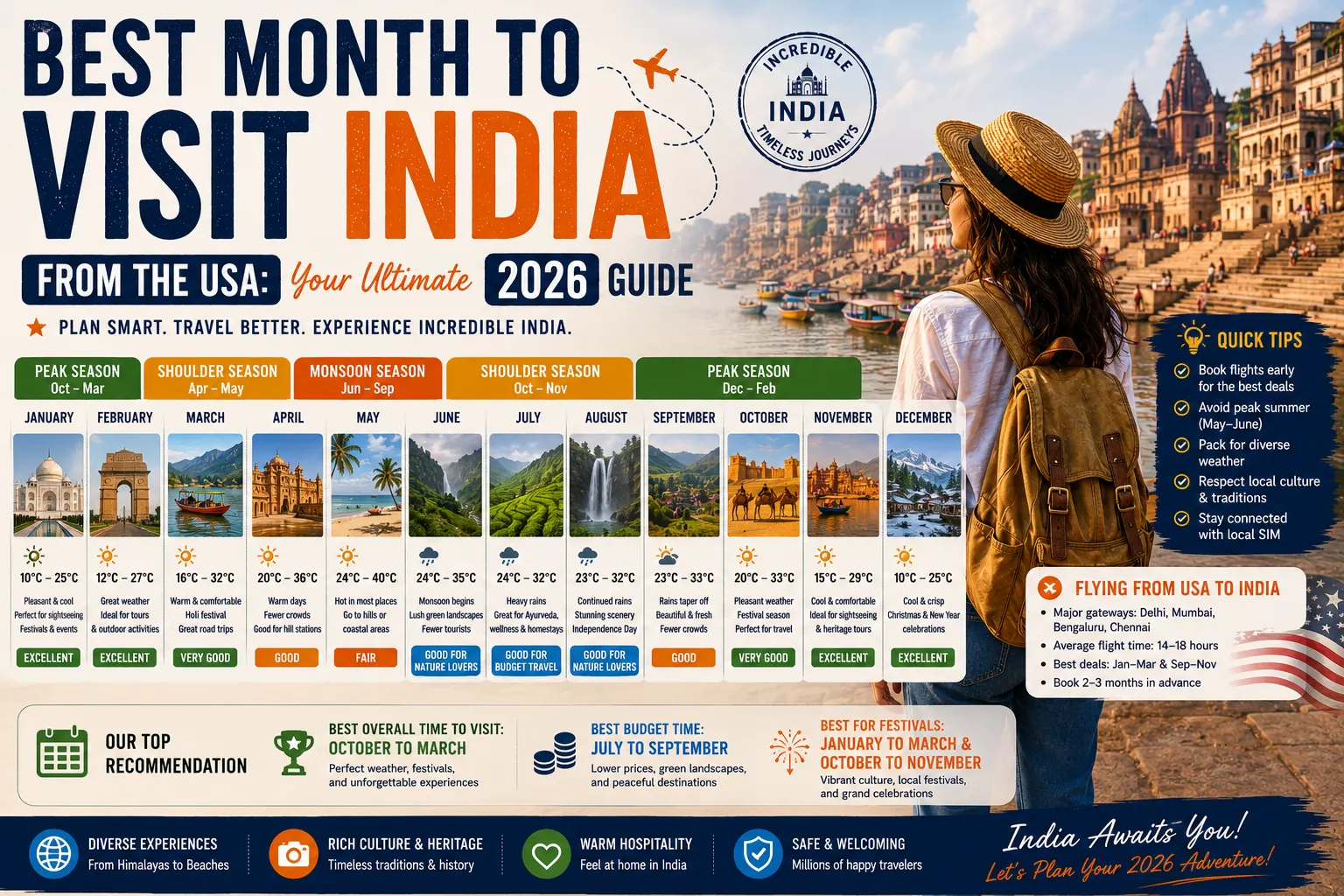
Planning a transatlantic journey to the vibrant, chaotic, and incredibly beautiful Indian subcontinent is a thrilling endeavor. Because the flight from the United States often spans 15 to 24 hours, timing your vacation perfectly is critical to maximizing your experience and avoiding extreme weather. If you are asking yourself, “what is the best month to visit India from the USA?”, the answer heavily depends on exactly which part of this massive country you wish to explore.
India’s geography encompasses the towering snow-capped peaks of the Himalayas, the arid deserts of Rajasthan, and the tropical, palm-fringed backwaters of the deep south. Each region experiences its own distinct climatic micro-seasons. In 2026, with expanded direct flight routes from cities like New York, San Francisco, and Chicago to Delhi and Mumbai, getting there is easier than ever. However, arriving in Delhi in December requires a vastly different itinerary—and wardrobe—than arriving in May. In this comprehensive guide, we will break down the Indian calendar month by month, highlighting the optimal travel windows for your specific interests, whether you are seeking spiritual awakenings in Varanasi or high-altitude adventures in Manali.
Overview: Timing Your Indian Adventure Perfectly
To determine the best month to visit India from the USA, you must first understand the three primary seasons that govern the subcontinent: Winter, Summer, and the Monsoon.
For the vast majority of American tourists, the traditional “Winter” season (October through March) is universally considered the golden window for travel. During this period, the oppressive heat of the plains subsides, offering clear blue skies, crisp mornings, and comfortable daytime temperatures that perfectly align with heavy sightseeing.
However, India is not a monolith. When the plains are enjoying perfect winter weather, the far northern mountain passes are buried in snow and completely inaccessible. Conversely, when the North Indian plains are baking in the intense summer heat of May and June, the high-altitude regions of the Himalayas transform into a cool, lush paradise. Understanding this geographical seesaw is the key to planning a flawless, comfortable itinerary.
The Winter Season: The Absolute Best Month to Visit India from the USA
If you are planning to explore the classic North Indian travel circuits—which include the most famous monuments, spiritual centers, and royal palaces—the winter months are your prime target.
October to November: The Festive Awakening
October marks the official end of the monsoon season. The country is washed clean, the landscapes are lush and green, and the temperatures begin to drop to comfortable levels. This is a spectacular time to visit from the US, as you avoid the absolute peak-season crowds of December while still enjoying excellent weather.
November is arguably one of the most culturally vibrant months to be in India due to Diwali, the Festival of Lights. Experiencing Diwali in cities like Jaipur or Varanasi is an unforgettable, sensory-rich experience. The weather in November is ideal for exploring the newly expanded spiritual corridors of Ayodhya or taking peaceful boat rides along the Ganges River.
December to February: Peak Season for North India Travel Circuits
For Americans looking to escape the harsh winters of the Midwest or the East Coast, December, January, and February are magnificent. In fact, many travel experts cite February as the absolute best month to visit India from the USA.
During these months, the Golden Triangle (Delhi, Agra, and Jaipur) is at its most pleasant. Daytime temperatures hover around a perfect 70°F to 75°F (21°C to 24°C). This is the optimal time to book a sunrise Taj Mahal tour in Agra, as the early morning mist creates a stunning, ethereal backdrop for photography. It is also the perfect weather for embarking on an 8-day Rajasthan wildlife tour; spotting Bengal tigers in Ranthambore National Park is much more comfortable when you aren’t battling blistering heat.
Note for January travelers: Northern cities like Delhi and Agra can experience heavy morning fog in late December and January, which can occasionally delay domestic flights and early morning trains. Pack layers, as the evenings can become surprisingly chilly, dropping into the low 40s°F (5°C).
March: The Vibrant Colors of Holi
March acts as a transition month. The cool winter air begins to warm up rapidly, but the heat is not yet oppressive. March is world-famous for Holi, the Festival of Colors. If experiencing this joyous celebration is on your bucket list, this is the month to fly over. The most spectacular and authentic Holi celebrations occur in Mathura and Vrindavan, located conveniently close to Agra. The energy is electric, making March a highly sought-after month for cultural photographers and adventurous families.
The Summer Season: Beating the Heat in the Himalayas
By April, the North Indian plains begin to heat up significantly, and by May and June, temperatures routinely soar above 105°F (40°C). For tourists unaccustomed to extreme heat, cities like Delhi and Jaipur can become physically exhausting. However, this is precisely when the Indian Himalayas open up. If your ideal vacation involves mountain trekking and cool breezes, summer is your best month to visit India from the USA.
April to June: Escaping to Shimla and Manali
As the plains bake, domestic and international tourists alike flock to the hills of Himachal Pradesh and Uttarakhand. Destinations like Shimla and Manali offer a perfect respite, featuring temperatures in the comfortable 60s and 70s°F. These towns boast excellent infrastructure, colonial-era charm, and sprawling pine forests.
Further east in Uttarakhand, the spiritual towns of Rishikesh and Haridwar remain accessible and popular during early summer. The cooler waters of the Ganges provide relief, and it is the premier season for white-water rafting and yoga retreats before the monsoon rains arrive.
May to September: The Magic of Leh Ladakh
For the truly adventurous American traveler, the ultimate summer destination is the high-altitude desert of Leh Ladakh. Due to heavy snowfall, the mountain passes leading to Ladakh are entirely closed for half the year. They only become reliably accessible from late May through September.
This region offers an experience completely distinct from the rest of India. Influenced heavily by Tibetan Buddhism, Ladakh features stark, dramatic landscapes, crystal-clear lakes like Pangong Tso, and ancient hilltop monasteries. A comprehensive Leh Ladakh with Kashmir tour package is best executed in July or August, providing a stunning, cool-weather contrast to the intense summer heat found in the rest of the Northern Hemisphere.
The Monsoon Season: Lush Landscapes and Unique Experiences
The Indian monsoon generally sweeps across the country from July through September. While heavy, unpredictable downpours can disrupt travel plans, cause flight delays, and limit outdoor sightseeing, the monsoon brings its own unique brand of magic for those willing to brave the rain.
July to September: Ayurvedic Retreats in the South
If you are planning to visit the southern state of Kerala, the monsoon is traditionally considered the most effective time to undergo Ayurvedic wellness treatments. The cool, moist air is believed to open the body’s pores, making herbal oil massages and detox therapies highly potent. Floating on a houseboat through the Kerala backwaters while the rain gently falls is an incredibly romantic and rejuvenating experience, perfect for professionals seeking a deep disconnect from US corporate life.
Rajasthan in the Rain: A Different Perspective
While the monsoon brings heavy rain to the coasts, the desert state of Rajasthan receives much milder showers. Visiting cities like Udaipur during August can be surprisingly pleasant; the surrounding Aravalli hills turn a vibrant, startling green, and the lakes fill to the brim. Plus, traveling during the monsoon off-season means you will secure luxury heritage palace hotels at a fraction of their peak-winter prices.
Practical Tips for US Travelers Navigating India’s Seasons
Once you have identified the best month to visit India from the USA for your specific itinerary, preparing for the logistics of international travel is the next crucial step.
Packing Strategies for Extreme Weather Variations
Your packing list will vary wildly depending on your chosen month.
- Winter Travel (Nov-Feb): Bring layers. A warm fleece or light down jacket is essential for early morning safaris in Ranthambore or nighttime train rides. During the day, light cotton clothing is perfectly fine.
- Summer Travel (May-Aug in the mountains): Pack sturdy hiking boots, windbreakers, and high-SPF sunscreen, as the UV rays at high altitudes in Ladakh are incredibly intense.
- Monsoon Travel (Jul-Sep): Fast-drying synthetic clothing, a high-quality raincoat, and waterproof footwear (like sturdy sandals or water-resistant trekking shoes) are non-negotiable.
Digital Payments and E-Visas
No matter what month you visit, the administrative process remains the same. US citizens require a visa to enter India, which can be easily obtained online via the official e-Visa portal. Apply at least two weeks before your departure.
Financially, India in 2026 is a digital-first economy. The Unified Payments Interface (UPI) allows tourists to make mobile payments by scanning QR codes. Download a tourist-friendly UPI app (like Cheq) before leaving the US to easily pay for meals, auto-rickshaws, and souvenirs without constantly hunting for an ATM or carrying large amounts of cash.
Conclusion: Pinpointing Your Best Month to Visit India from the USA
India is a destination that defies simple categorization. It is a country of extreme geographical diversity, meaning there is truly no single “wrong” time to visit—only the wrong region for a particular season.
Deciding on the best month to visit India from the USA ultimately comes down to your personal travel goals. If you envision yourself wandering through the opulent palaces of Jaipur, gazing at the Taj Mahal at dawn, or experiencing the spiritual intensity of Varanasi, target the pristine winter months between November and March. If escaping into the tranquility of the Himalayas or exploring the stark beauty of Leh Ladakh calls to you, the summer months of May through August will provide the perfect backdrop.
By aligning your itinerary with the subcontinent’s distinct micro-seasons, you guarantee a comfortable, awe-inspiring, and life-changing journey.
Ready to start planning your 2026 adventure? Dive deeper into our regional guides by checking out the Delhi Agra Jaipur Amritsar Tour Package: A Beginner’s Guide or subscribe to our newsletter for the latest travel tips, flight deals, and expert itineraries delivered straight to your inbox!
Frequently Asked Questions (FAQs)
Q.1 What is universally the best month to visit India from the USA?
If you want to visit the most famous monuments like the Taj Mahal and the forts of Rajasthan in comfortable weather, February is widely considered the absolute best month. The winter chill has lifted, the skies are clear, and the extreme summer heat has not yet arrived.
Q.2 Is it safe to travel to India during the monsoon season?
Yes, but it requires flexibility. Heavy rains can cause localized flooding and train delays. If you travel during July or August, it is best to avoid the Himalayan regions (due to landslide risks) and focus on Rajasthan or book a wellness retreat in the South.
Q.3 Are there direct flights from the US to India year-round?
Yes. Major carriers like Air India, United, and American Airlines operate direct flights from hubs like New York (JFK/EWR), San Francisco (SFO), and Chicago (ORD) directly to New Delhi (DEL) and Mumbai (BOM) regardless of the season.
Q.4 Can I see tigers if I visit India in the summer?
Actually, the scorching summer months of April and May are the best times for tiger spotting. Because water sources dry up in the heat, tigers are forced out of the dense jungle to drink at the few remaining watering holes in parks like Ranthambore, making them much easier to spot.
Q.5 How far in advance should a US citizen book a trip to India?
If you plan to travel during the peak winter season (December to February), you should book your international flights, luxury hotels, and high-demand train tickets at least 4 to 6 months in advance to secure the best rates and availability.