
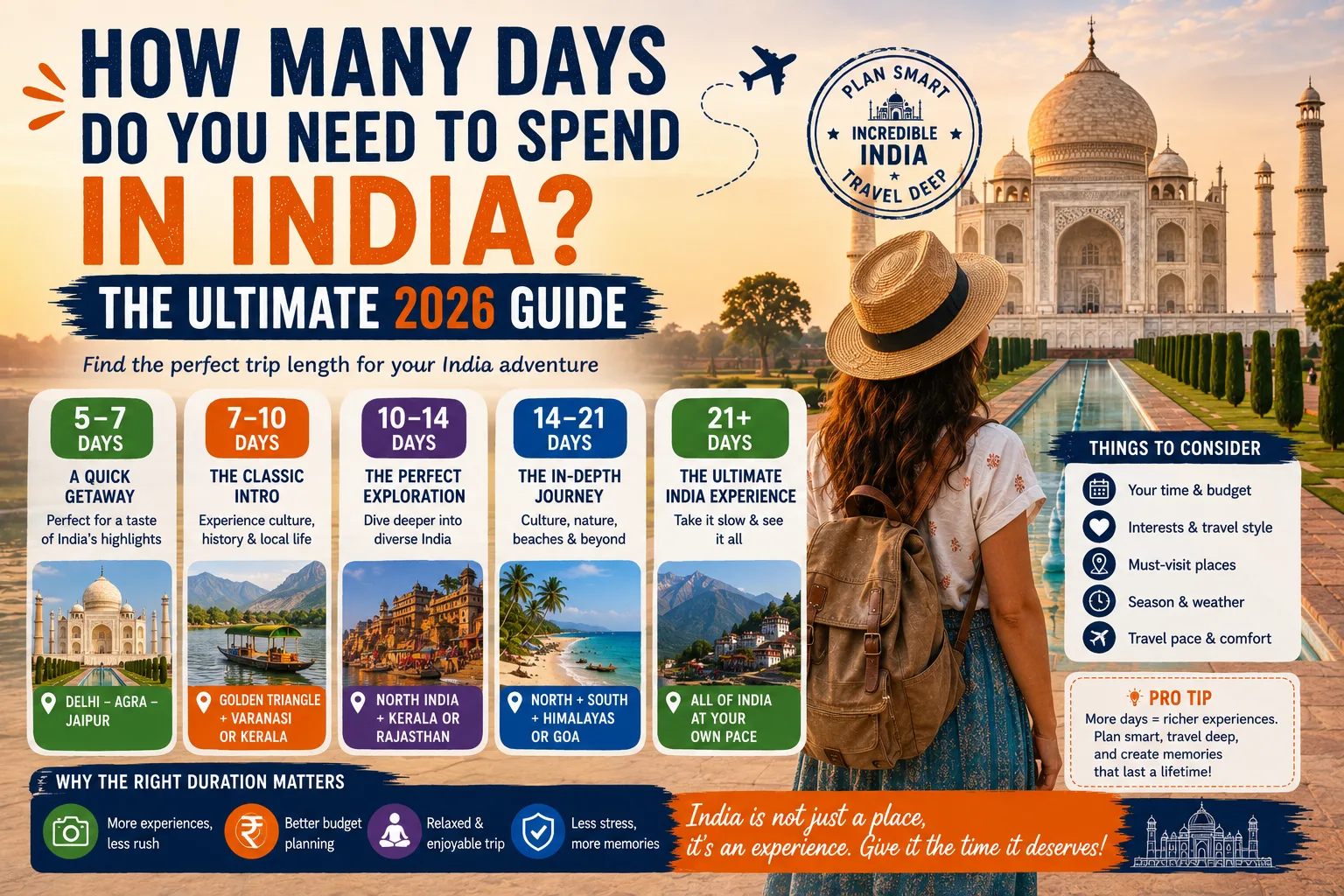
How Many Days Do You Need to Spend in India? The Ultimate 2026 Guide
Introduction
When planning a journey to the magnificent subcontinent, the very first logistical hurdle you will encounter is deciding on your trip’s duration. The sheer scale, diversity, and geographical magnitude of the country can be overwhelming, prompting the ultimate question: how many days do you need to spend in India to truly experience its magic?
In 2026, traveling across India is more efficient than ever, thanks to rapid expansions in domestic aviation, high-speed rail networks, and seamless digital infrastructure. However, the golden rule of Indian travel remains unchanged: less is often more. Attempting to conquer the towering Himalayas, the royal palaces of Rajasthan, and the spiritual ghats of the Ganges in a single, rushed trip is a recipe for travel burnout. Whether you are a professional seeking a quick cultural immersion, a family wanting a structured holiday, or a backpacker ready for an epic adventure, defining the right timeframe is crucial. In this comprehensive guide, we will break down the ideal itineraries—ranging from a focused 7-day excursion to a sweeping 4-week deep dive—to help you craft the perfect, unforgettable Indian journey.
Factors Dictating Your India Trip Duration
Before locking in your flight dates, it is vital to understand the unique variables that will dictate the pace and length of your trip.
Travel Pace and Logistics
India is incredibly vast. Traveling between major tourist hubs takes time, even with modern upgrades. A journey from Delhi to the southern tip of Kerala is comparable to flying from London to Moscow. If you only have a week, you must accept that your trip will be highly localized. Rushing from city to city every 24 hours means you will spend more time in transit than actually enjoying the monuments, food, and culture. A slower travel pace allows you to absorb the atmosphere, interact with locals, and recover from the sensory intensity that makes India so captivating.
Regional Focus vs. Cross-Country Travel
Are you drawn to the royal forts and tigers of the North, or the serene backwaters and ancient temples of the South? If you wish to experience a single region—such as the classic North Indian travel circuits—a 10 to 14-day window is excellent. If your dream is to cross geographical boundaries and witness the drastic cultural shifts between the North and the South, you must allocate an absolute minimum of three weeks to do it justice without exhaustion.
The Short Trip: 7 to 10 Days in India
If your time is strictly limited by work or school schedules, a 7 to 10-day trip is entirely feasible. The key here is laser focus. Do not attempt domestic flights to far-flung states. Instead, pick a dense, highly accessible cluster of destinations.
The Classic Golden Triangle + Mathura and Vrindavan
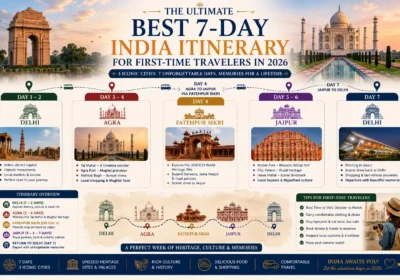
For a first-time visitor with a week to spare, the Golden Triangle is the undisputed champion. Connecting Delhi, Agra, and Jaipur, this route boasts impeccable tourist infrastructure.
- Days 1-2 (Delhi): Explore the Mughal architecture of Humayun’s Tomb and the bustling markets of Old Delhi.
- Days 3-4 (Agra & Surrounds): Travel to Agra. Booking a sunrise Taj Mahal tour is essential to beat the crowds and the heat. Later in the day, you can comfortably fit in a Fatehpur Sikri tour from Agra, exploring the magnificent deserted Mughal city.
- Day 5 (Mathura and Vrindavan): Rather than rushing straight to Rajasthan, take a deeply rewarding detour. A Golden Triangle tour with Mathura and Vrindavan offers profound spiritual insight. As the birthplace of Lord Krishna, these twin cities are vibrant, colorful, and teeming with devotion.
- Days 6-7 (Jaipur): Conclude your week in the Pink City, exploring the Amber Fort and shopping for textiles before flying out of Delhi.
A Quick Himalayan Escape to Shimla or Manali
If you want to bypass the heat of the plains, dedicating 7 to 10 days to the mountains is a brilliant alternative. Flying into Chandigarh or taking the Vande Bharat train north allows for a quick ascent into Himachal Pradesh. You can spend a relaxing week exploring the colonial heritage and pine forests of Shimla, or travel further north to Manali for stunning high-altitude vistas, gentle trekking, and crisp, unpolluted mountain air.
The Ideal Vacation: 14 to 15 Days in India
When travel experts are asked, “how many days do you need to spend in India?”, the most common and enthusiastic answer is two weeks. Fourteen to fifteen days is the sweet spot. It provides enough time to overcome jet lag, settle into the cultural rhythm, and explore multiple distinct environments without feeling rushed.
The Ultimate Rajasthan Heritage and Wildlife Tour
With a full two weeks, you can expand significantly beyond the Golden Triangle to explore the broader wonders of Rajasthan. An ideal 14-day itinerary allows you to combine majestic royal history with thrilling natural encounters.
- The Heritage Trail: After completing Delhi and Agra, push deeper into Rajasthan to tourist cities like Udaipur, known as the Venice of the East with its serene lakes, and Jodhpur, the Blue City dominated by the imposing Mehrangarh Fort.
- 8 Days Rajasthan Wildlife Tour: Integrating wildlife into this two-week span is highly recommended. Dedicate a segment of your trip to Ranthambore National Park. With multiple days available, you can book several guided jeep safaris, maximizing your chances of seeing wild Bengal tigers, leopards, and sloth bears in their natural dry-deciduous habitat.
The Extended North: Delhi Agra Jaipur Amritsar Tour Package
Another phenomenal two-week route involves heading northwest into Punjab. After the Golden Triangle, take a high-speed train to Amritsar. Here, you can spend two days witnessing the profound tranquility of the Golden Temple (Harmandir Sahib) and the patriotic fervor of the Wagah Border ceremony. This route offers a beautiful contrast between the Mughal history of Agra, the Rajput heritage of Jaipur, and the Sikh traditions of Punjab.
The Spiritual North Circuit: Varanasi, Ayodhya, Rishikesh, and Haridwar
For travelers seeking a deeper, more introspective journey, 14 days allows you to navigate the holiest cities along the Ganges River.
- Start by flying into Varanasi to witness the ancient, life-and-death rituals on the sacred ghats.
- From there, travel to the newly modernized spiritual corridors of Ayodhya to visit the Ram Mandir.
- Conclude your trip further north in Uttarakhand, splitting 4 to 5 days between Rishikesh and Haridwar. Rishikesh offers a globally renowned yoga and wellness scene, while Haridwar provides the breathtaking spectacle of the evening Ganga Aarti, completely different in vibe from Varanasi.
The Deep Dive: 3 to 4 Weeks in India
If you are fortunate enough to have a month at your disposal, the subcontinent truly opens up. A three-to-four-week duration allows you to shift from a “tourist” mindset to a “traveler” mindset, accommodating rest days, spontaneous detours, and deep regional explorations.
Leh Ladakh With Kashmir Tour Packages
A three-week window is the absolute perfect timeframe to tackle the rugged, high-altitude extremes of the far North, particularly during the summer months (June to September). A comprehensive Leh Ladakh with Kashmir tour package requires time primarily for altitude acclimatization and the unpredictability of mountain roads.
- Kashmir: Spend your first week in the lush, green valleys of Kashmir, staying on a traditional wooden houseboat on Dal Lake in Srinagar, and exploring the alpine meadows of Gulmarg and Pahalgam.
- Ladakh: Take the spectacular, multi-day road trip over the high passes into Ladakh. With two weeks dedicated to this high-altitude desert, you can safely acclimatize in Leh before exploring the ancient Buddhist monasteries, the crystal-clear waters of Pangong Lake, and the stark, beautiful dunes of the Nubra Valley.
Combining the North and the South
With 21 to 28 days, you can finally cross the geographical divide. Spend your first two weeks exploring the intense, fast-paced North Indian travel circuits (like Rajasthan and Varanasi). Then, take a domestic flight down to Kerala or Tamil Nadu. The remaining two weeks can be spent unwinding in the tropical, slow-paced environment of the South, floating on backwater houseboats, visiting ancient Dravidian temples, and enjoying the relaxed beaches of the Malabar Coast. This contrast provides the most complete picture of India’s immense diversity.
Practical Tips for Maximizing Your Trip Duration
No matter how many days you ultimately decide to spend in India, optimizing your logistics will ensure you get the most value out of every single hour.
Leverage Modern Transport Infrastructure
Do not rely on outdated guidebooks when estimating travel times. In 2026, the Indian Railway system has been transformed by the Vande Bharat Express network. These semi-high-speed, fully air-conditioned trains run between major tourist hubs (like Delhi to Varanasi, or Delhi to Jaipur) rapidly and comfortably. For longer distances (e.g., Rajasthan to Kerala), India boasts one of the most robust and affordable domestic aviation sectors in the world. Booking internal flights via carriers like IndiGo or Vistara saves you literal days of transit time compared to cross-country trains.
Master Digital Payments for Efficiency
Time spent searching for ATMs, haggling over change, or dealing with counterfeit notes is time wasted. India is now a heavily digitized economy operating on the Unified Payments Interface (UPI). By downloading a tourist-friendly UPI app before you arrive and linking your home credit card, you can scan QR codes to pay for almost everything—from your luxury hotel bill to a cup of chai on the street. This friction-free financial ecosystem significantly streamlines your daily travel experience.
Conclusion: Finalizing Your Indian Itinerary
Deciding how many days do you need to spend in India ultimately comes down to balancing your available vacation time with your travel ambitions. If you are constrained to a single week, laser-focus your efforts on the rich history of the Golden Triangle or a quick Himalayan retreat to Shimla. If you can stretch your time to the ideal 14-day mark, the country opens up, allowing for magnificent combinations like the Delhi Agra Jaipur Amritsar route or an extended Rajasthan wildlife adventure. And if you have a month, you possess the ultimate luxury: the time to let India truly seep into your soul.
Whatever timeframe you choose, remember that India is a destination that demands flexibility, patience, and an open heart. Do not over-schedule your days. Leave room for spontaneous conversations over chai, unexpected temple festivals, and moments of quiet reflection.
Ready to start building out the specifics of your upcoming journey? Dive into our expertly crafted itineraries, starting with The Ultimate 8 Days Rajasthan Wildlife Tour: Tigers and Heritage, or subscribe to our travel newsletter for more in-depth guides, practical advice, and destination inspiration delivered straight to your inbox!
Frequently Asked Questions (FAQs)
Q.1 What is the absolute minimum number of days required for an India trip?
For an international traveler flying long-haul, 7 days is the absolute minimum. This gives you enough time to overcome the initial jet lag and comfortably complete a localized circuit, such as the Golden Triangle (Delhi, Agra, Jaipur).
Q.2 Is a 10-day trip to India worth it?
Yes, absolutely. A 10-day trip allows you to enjoy a region without feeling desperately rushed. You could comfortably complete the Golden Triangle and add an extension, such as a wildlife safari in Ranthambore or a spiritual retreat to Rishikesh and Haridwar.
Q.3 When is the best time to visit India?
The optimal time for most of the country—especially the North Indian travel circuits, Rajasthan, and the South—is during the winter months, from October to March. The weather is dry and cool. If you are planning to visit the high Himalayas (like Leh Ladakh or Spiti Valley), the summer months of May to September are the only safe and accessible times.
Q.4 How many days do I need for Rajasthan?
To properly experience the royal state of Rajasthan, you need a minimum of 10 to 14 days. This allows you to travel the vast distances between key tourist cities like Jaipur, Jodhpur, Udaipur, and Jaisalmer, while also making time for an 8-day Rajasthan wildlife tour segment in Ranthambore or Jawai.
Q.5 Is it better to travel fast and see more, or travel slow and see less?
In India, traveling slow is always the superior choice. The sensory input, cultural differences, and geographical vastness demand a measured pace. Trying to cram five major cities into seven days will leave you exhausted and stressed. Pick fewer destinations and immerse yourself deeply in them.